Patagonia: Walking the Edge
Three weeks at the bottom of the world. The wind, the silence, the granite, and what it does to your sense of scale.
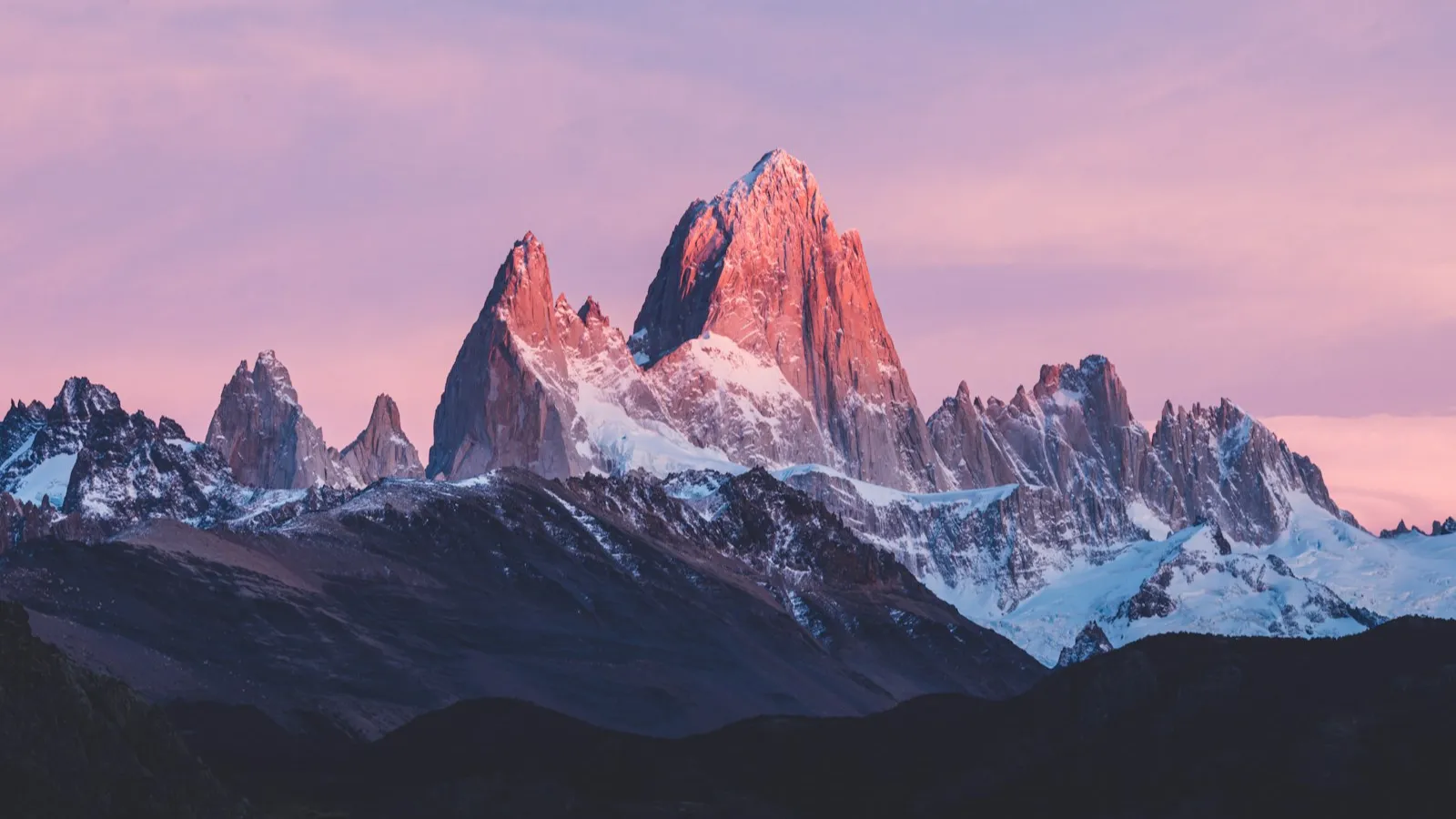
Three things stay with you from Patagonia after you've come home and the photographs have started to feel improbable. The wind, which is unlike any wind you've experienced in Europe or North America — sustained, sometimes at sixty kilometres an hour for days at a time, occasionally strong enough to knock you off balance. The silence, the kind that exists in places without much human presence and which you only notice when, three days into a hike, you stop walking and realize you cannot hear anything except the wind and your own heartbeat. And the granite — the peaks, named and unnamed, that rear up suddenly from steppe and end as suddenly. The Fitz Roy massif, the Torres del Paine, the dozens of less-famous ranges. Granite teeth, was how an Argentine friend described them. He was right.
I spent three weeks in Patagonia in November 2025. Two of those weeks in Argentina, one in Chile. I went with a tent, a backpack, and reasonable Spanish. I came back fitter, sun-darker, and with a recalibrated sense of how large a landscape can be.
The shape of a trip
Patagonia is enormous — about the size of France and Spain combined — and most travelers spend time in only one or two specific zones. The two famous zones are:
El Chaltén (Argentina) and around the Fitz Roy massif. A small mountaineering town with day-hikes radiating out in every direction. The Laguna de los Tres trail goes straight to the base of Fitz Roy in five hours. Other trails are quieter and equally spectacular. You can hike from here for a week without repeating.
Torres del Paine (Chile). The W and O circuit hikes, four to ten days, through one of the most photographed national parks on earth. You camp in designated refugios (mountain huts with platforms). You pay for permits in advance — they're rationed to manage impact. This is the more organized, more popular version of Patagonia.
You can do both in three weeks if you move efficiently. Add a few days at the start in Buenos Aires and a few at the end in Santiago for decompression.
Wind
The first morning I tried to make coffee in El Chaltén, the wind blew the stove out three times. By the fourth attempt I used my body as a windbreak — squatting beside the stove, blocking with my back. The water boiled in three minutes. I felt like an idiot for not having thought of it sooner. Within a week this was instinctive.
The wind is not a hazard so much as a condition. You plan around it. You don't hike to high ridges on bad-wind days. You set up tents in sheltered spots and stake them with twice the guy lines you'd use in the Alps. You wear sunglasses constantly even when it's overcast, because the wind carries fine grit. You eat in the lee of rocks.
When the wind drops, which it occasionally does for an hour or a half-day, the silence becomes the dominant fact. Both sensations — the wind and its absence — are part of the same landscape. You stop minding the wind by week two. You start to suspect you'll miss it when you go home.
What you see
Fitz Roy at sunrise has been photographed so many times that you arrive expecting cliché. The reality is so much larger than the photograph that the photograph feels like a polite suggestion. The granite is white-grey, with rust-colored mineral staining in patches. At dawn, on a clear morning, the eastern faces catch the first light and turn an actual color of pink that the word "pink" doesn't quite describe. The light moves down the face over the course of about fifteen minutes. People in tents at the Laguna de los Tres campground stand outside in their thermals, silent, watching.
The Torres del Paine, on the W circuit, are different — three vertical towers visible from a moraine at the end of a long valley. You hike four to five hours to get there. The wind funnels through the valley with particular enthusiasm. When you arrive at the lookout, you sit on a rock, eat lunch, and stare. People do not talk much there.
The steppe, between the famous viewpoints, is its own thing. Vast, low, wind-bent grass, herds of guanaco watching you from a distance, occasionally an Andean condor wheeling overhead. Driving across the steppe at 80 km/h, the landscape changes so slowly that you start to suspect the car is broken.
What you do not see
Glaciers. You see them, but the photographs do not prepare you. Perito Moreno, the famous one near El Calafate, is 30 km long and the front face is 60 metres tall. You stand on viewing platforms and large blocks of ice the size of buildings calve off into the lake every twenty minutes with a sound like a distant howitzer. You will spend three hours doing this and not feel like leaving.
Penguins, in places. Magellanic penguins on the Atlantic coast. Worth a day if you have it.
Cell signal, internet, anything resembling routine connectivity. Plan for it. Download offline maps before you leave Buenos Aires.
Logistics that matter
Permits and reservations. Torres del Paine requires camping reservations months in advance for high season. El Chaltén is free — show up and hike. If you want to do Torres in shoulder season (October–November or March–April), book in July at the latest.
Gear. Wind-rated tent. Three-season sleeping bag rated to -5°C even in summer. Trekking poles (the wind, the river crossings). A buff for face protection on the worst days. Decent boots. Don't go cheap on the rain jacket.
Buses. Long-distance buses between towns are the standard mode of transport. They're reliable, comfortable, and slow. A 250 km journey takes 4-6 hours. Plan accordingly.
Spanish. Helps a great deal. Patagonian Spanish is different from Mexican or Spanish Spanish in accent and a few words, but anyone with basic Spanish can navigate. Outside the tourist tracks, English is rare.
Why go
Patagonia is one of the few places left in the world that has not been optimised. The towns are small and unfashionable. The food is plain (lamb, potatoes, bread, malbec). The internet is bad. The weather makes plans impossible. The wind is exhausting.
And the landscape, when you've walked into it for long enough that your body has accepted the conditions, does something to you that more comfortable places cannot. It reminds you of scale — not in a heroic way, but in a quiet, returning way. The granite was there before you. It will be there after you. The wind has blown this hard for ten thousand years.
You come back tired and humbled in a useful way. Not a revelation, exactly. Just a recalibration of how big the world is, and how small most of what we worry about is when measured against it.
Three weeks. Recommended.
- argentina
- hiking
- patagonia
- wilderness