Crossing the Alps by Train
Zurich to Milan by daylight train — six hours of mountains, lakes, and tunnels that turn ordinary scenery into something else.
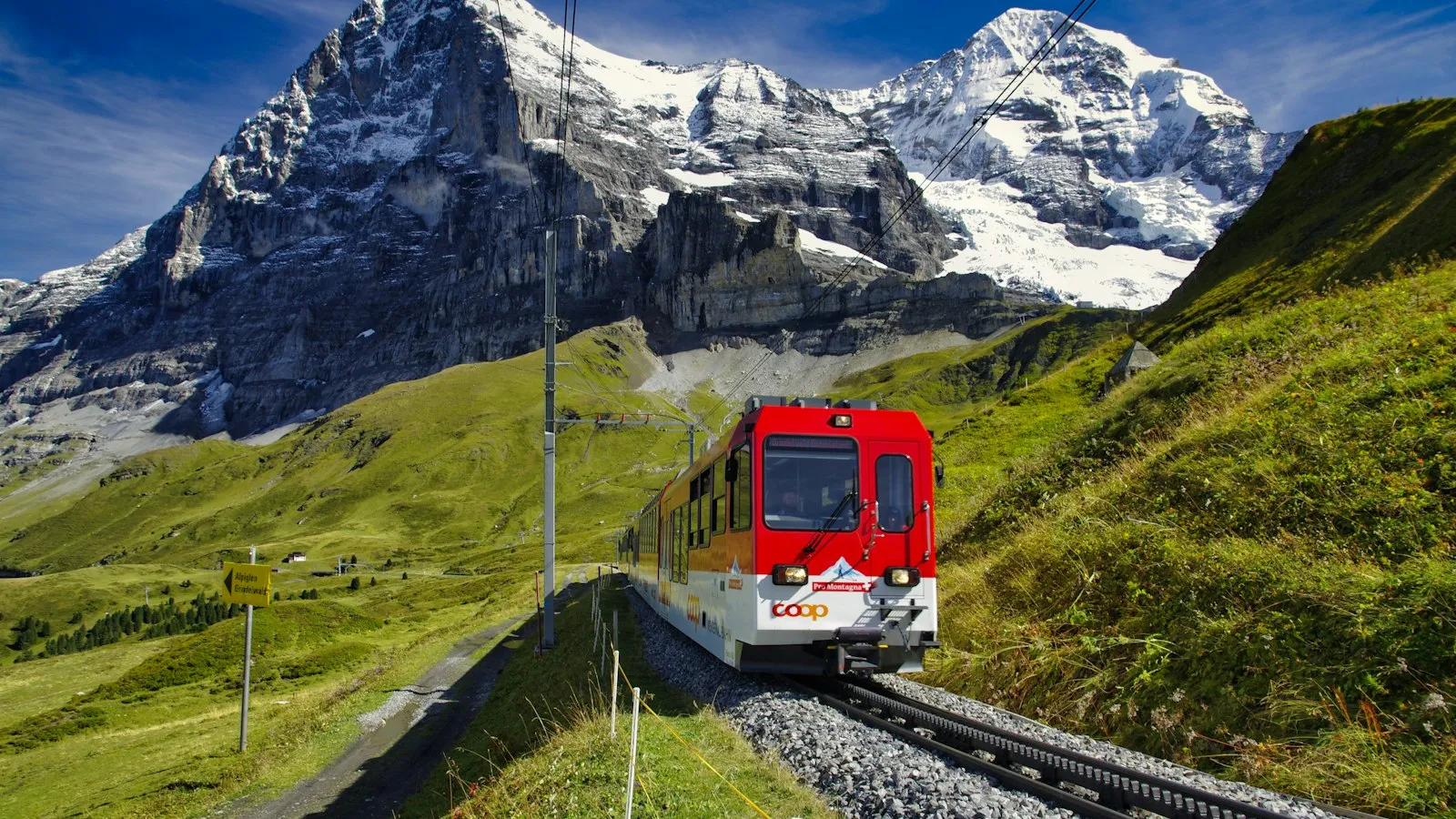
There is a kind of European train journey that, depending on your generation, you either grew up taking or grew up reading about: the train that goes through the Alps. It does not go through them quickly. It does not pretend that the mountains are an obstacle to be overcome. It treats them as the point of the journey, climbing and descending, taking the long way around lake shores, threading slowly through villages whose names you've never heard.
The route from Zürich to Milan via Lucerne and the Gotthard is one of the great daylight train journeys still operating in 2026. It takes about four and a half hours — six if you take the slow scenic version through Andermatt. It is busy with locals, comfortable, expensive in absolute terms, and worth the cost in a way that few things you pay for are.
The route
Zürich's main station is its own argument for European rail travel. Twenty-six platforms, a 1871 frescoed ceiling, and trains leaving every few minutes for places you've considered going to. You buy your ticket, you find platform seventeen, you board with twenty minutes to spare.
The first hour takes you south past Zug, Lucerne, and the western shore of Lake Lucerne. The train hugs the water. You see the lake from the same angle the lake has been seen for three centuries — from windows of train carriages, of stagecoaches before that, of villas that have always been on the shore.
Then comes Andermatt, and the climb. The line was built between 1872 and 1882 and it remains an engineering proposition the rest of Europe never quite matched. You spend an hour in spiraling tunnels and over high viaducts. You enter the Gotthard tunnel itself — 15 kilometres of dark — and exit into another country, climatically: the Italian-speaking south, palm trees, ochre stucco, café terraces that have always known they were beautiful.
By the time the train reaches Bellinzona, you are on a different planet. By Lugano, you are in conversation with Italy. By Milan Centrale, you have arrived without having really left.
The discipline of the daylight train
What makes this journey work is the slowness. The Gotthard Base Tunnel, opened in 2016, takes high-speed trains through the same mountain range in 17 minutes. It is a marvel of engineering and a near-perfect example of what is lost when efficiency replaces experience. The fast train through the base tunnel turns the Alps into a notification. You go in, you come out, you arrive faster. You also have not been anywhere.
The old Gotthard line, the slow one over the mountain, is what we used to call travel. It is now a niche product, kept alive because tourists pay for it and because Switzerland is a country that decided, against all economic logic, to maintain things that work. Some Sundays only see two or three full traverses. Other days it's busier. Either way it persists.
Practical notes
Tickets. Direct trains run roughly hourly. The scenic Gotthard Panorama Express runs seasonally (April–October) and requires reservation. Standard ICN and Eurocity trains take the modern route via the base tunnel — fast but visually unremarkable. For the slow scenic experience, look specifically for trains routed via "Göschenen" rather than "Bahn 2000".
Class. First class is worth it on this line. The carriages are quieter, the windows larger, the seats angled for the view. Second is fine; first is the kind of small luxury that defines a trip.
Food. Bring a sandwich from the Zurich station Migros. The dining car exists but is variable. Avoid the expensive trolley snacks.
Stopovers. Lugano is a beautiful 24-hour break. Bellinzona has three UNESCO castles within a 20-minute walk of the station. If you have an extra day, get off in Lucerne and rejoin the next day's train.
The case for not flying
Zürich to Milan is 287 km as the crow flies. The flight takes 50 minutes. The train takes four and a half hours. By every conventional measure — time, money, carbon — the train loses, except the last.
But the conventional measures only count if your purpose is arrival. If your purpose is travel — moving deliberately through a landscape, watching cities and lakes and mountains pass at human speed — the train wins every time. You arrive in Milan tired in a good way, having spent a morning on something. You have written postcards. You have read fifty pages. You have looked, for hours, at things worth looking at.
The fast train is for commuting. The slow train is for traveling. Europe still has both. Use them differently.
- alps
- europe
- journey
- switzerland
- train