Yanaka, Tokyo's Old Heart
The Tokyo most visitors miss — wooden shopfronts, paper lanterns, a thousand temples, and the cats that own all of it.
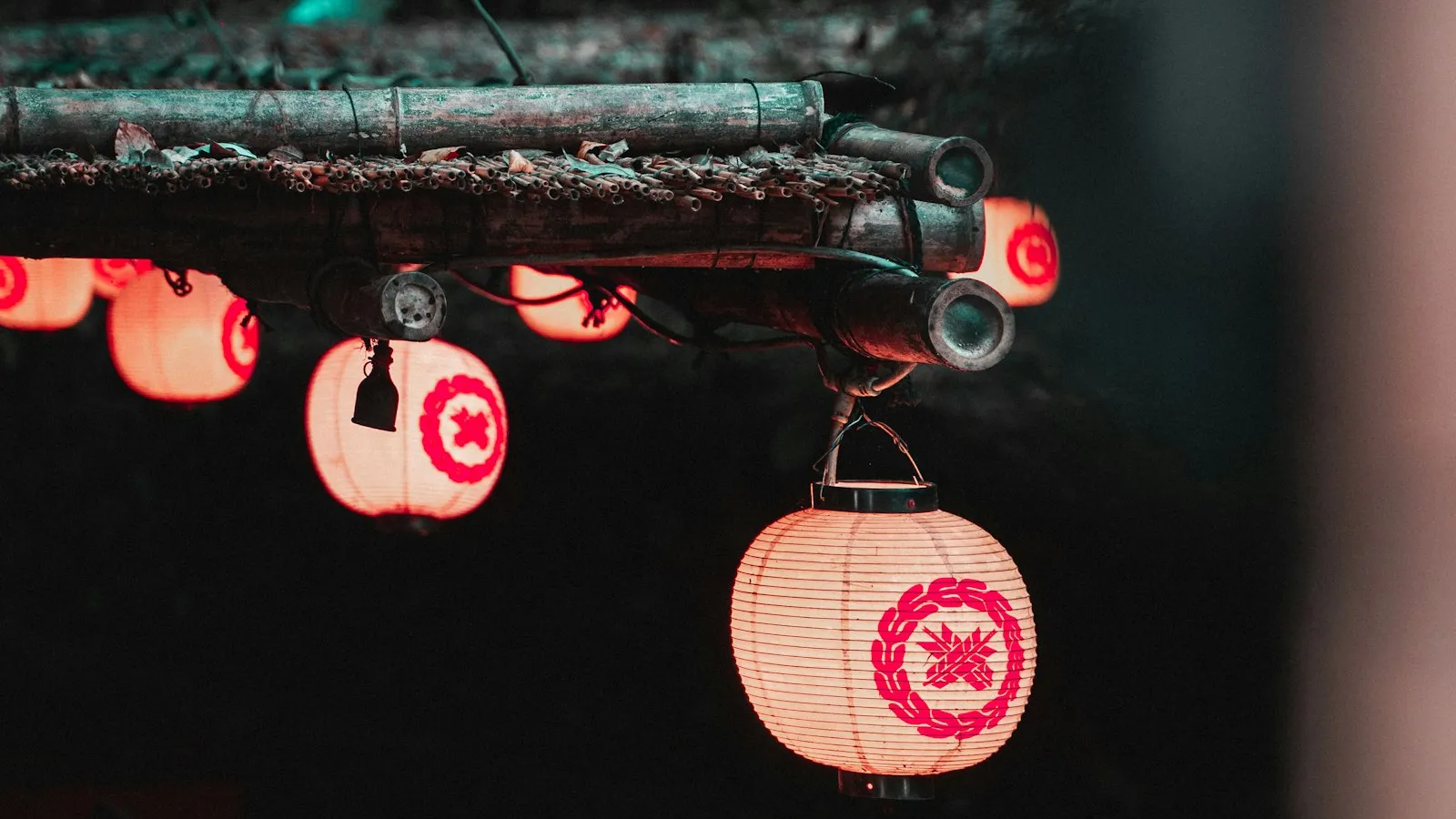
Yanaka is what people mean when they talk about old Tokyo, except old Tokyo doesn't really exist any more — it was firebombed, then rebuilt, then rebuilt again. Yanaka is an exception. The wartime bombing missed it. The post-war redevelopment money mostly went elsewhere. And so a small district north-east of Ueno Park, less than thirty minutes from the new Shibuya skyscrapers, kept its 1920s shopfronts, its hand-painted signs, its hundred-some Buddhist temples, and its enthusiastic population of stray cats.
You enter from Nippori Station, follow the south exit, and within three minutes you are walking down Yanaka Ginza — a narrow shopping street that has been a shopping street for three generations. The shops are not for tourists, though increasing numbers of tourists are catching on. A butcher who has been on the corner since 1953 sells menchi katsu (breaded ground beef cutlets) hot from the fryer for ¥350. A pickle shop. A dried-fish shop. A senbei (rice cracker) maker whose grandson now runs the place, mostly the same as before.
The temples
Yanaka has 70-something Buddhist temples in roughly two square kilometres. Most are small and quiet. They take time and accept walk-ins. Tennoji, near the southern edge, has a famous bronze Buddha from 1690 and a graveyard where Tokugawa Yoshinobu — the last shogun — is buried. Walk through the graveyard on a Sunday morning in October and you'll feel a stillness that ordinary Tokyo never quite allows.
Smaller temples don't make the guidebooks but reward attention. Joshinji has a moss garden you can sit in. Eishoji has, in the courtyard, the tombs of Edo-period geisha — a fact mentioned nowhere except a small wooden plaque that I once saw a Japanese grandmother stop to read for ten minutes. These are not tourist attractions. They are working religious buildings in a residential neighborhood, and you behave accordingly: quiet, slow, removing shoes at thresholds, not photographing what isn't yours.
The cats
If you stay in Yanaka for more than a day you will start to recognize individual cats. They are not strays in any malnourished sense — the neighborhood is full of small water bowls, sheltered corners, and grandmothers leaving food. The cats know which houses welcome them and which don't. They are unbothered by foreigners with cameras, having been photographed by tourists for years.
The most famous cat is the orange-and-white one at the corner of the steps leading down to Yanaka Ginza. Locals call him "Boss". He has been there, apparently the same cat or a series of identical cats, for at least eight years. He is fine.
When to walk
Mid-morning Tuesday through Friday is the quietest time. Weekends bring more visitors but also more local life — old men playing shogi outside the soba shop, children on school outings to the temples. Avoid public holidays.
I'd suggest starting at Nippori, walking south through Yanaka Ginza, working east into the temple district, then south again through the graveyard at Yanaka Reien, exiting at Sendagi. About 90 minutes if you don't stop. Three hours if you do.
Eating
Kayaba Coffee. A 1938 wooden building that has been a café almost continuously since. Egg sandwiches, kissaten-style coffee, slow afternoons. Don't expect speed.
Hantei. A century-old wooden house serving kushiyaki (skewers). Multiple sittings, reservations essential. Comfortable, not flashy, ¥6,000 a head.
Yanaka Beer Hall. Pretends to be older than it is. The local craft beer scene tucked into Yanaka's older bones — friendly proof that "old" and "new" co-exist comfortably here.
The discipline of Yanaka
Walking Yanaka teaches you something useful: that a neighborhood is not a sum of attractions, and that wandering is its own reward. You can do this district in a morning if you have a list. You can do it across a week if you don't. Both are legitimate. The week version stays with you longer.
The temptation in Tokyo is to optimise — to bounce between Shibuya, Asakusa, Akihabara, Shinjuku, ticking boxes, taking photos, never quite settling in. Yanaka makes a different argument. It says: stay. Walk slowly. Notice the cat. Buy the senbei. Come back tomorrow.
- japan
- neighborhood
- tokyo
- walking