A Winter in Reykjavík
The capital is half-empty between November and March. The light fails by three. The city feels — improbably — busier than ever.
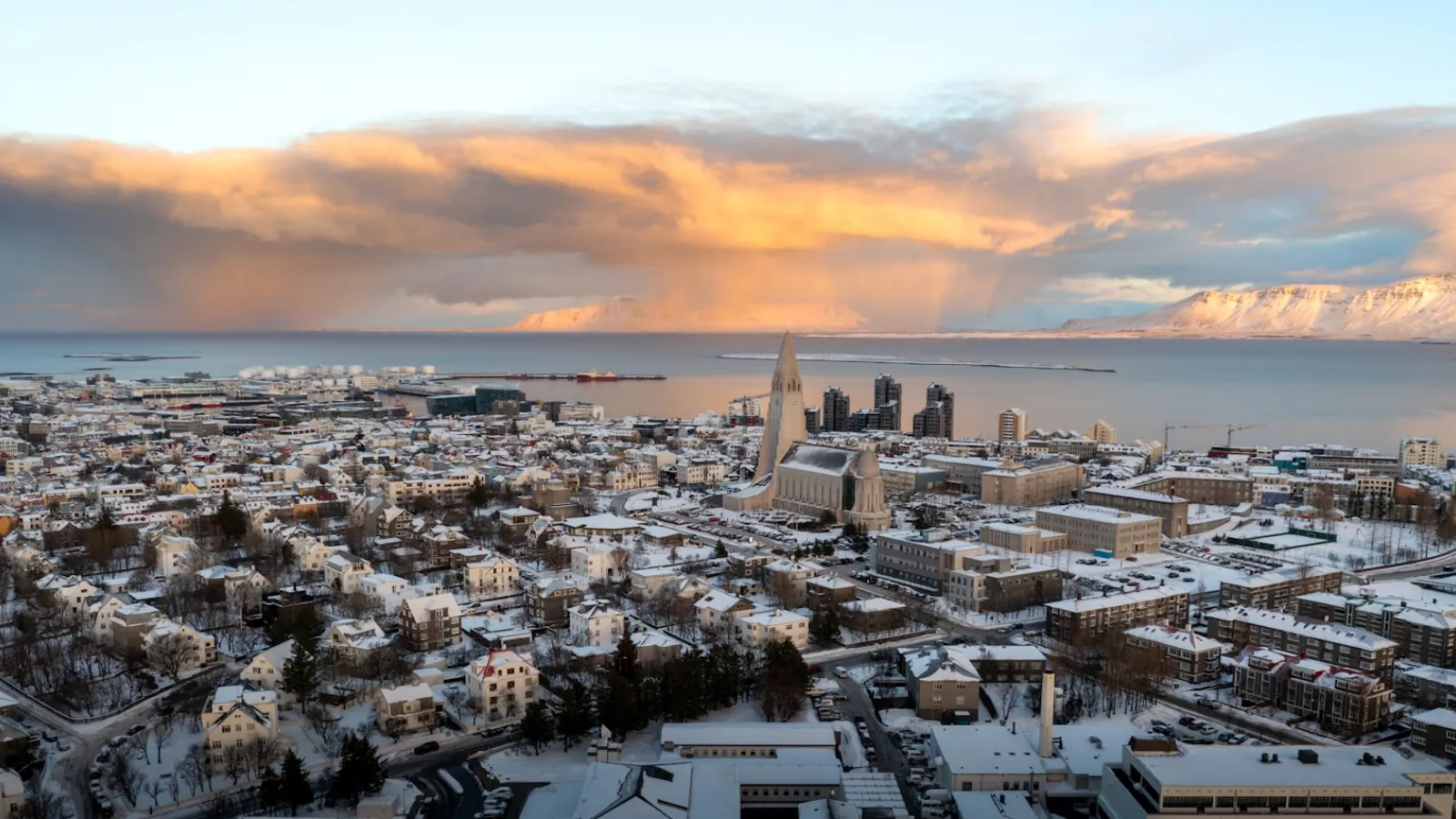
Reykjavík in winter is a city that has decided, against the evidence, to be cheerful. The light arrives at half-past nine and gives up at three in the afternoon. The wind, when it commits, will move you bodily across a street. The cold is not the worst cold I've felt — Stockholm is colder, Tallinn is colder — but it is a cold with intention behind it.
And yet the cafés are full. The bookshops stay open until ten. People walk along the harbour in down jackets that look engineered. There is more cake than seems strictly necessary for a population this size.
The shape of a winter day
You sleep until light, which means later than you would at home. Around nine, the eastern sky turns a deeply unfair pink — not sunrise exactly, more a sustained pre-dawn that lasts an hour and twenty minutes. By the time you've finished coffee and put on the third layer, it's noon.
Twelve to three is your day. Use it. Walk into town along Sæbraut, past the harbour. Take in the Harpa concert hall reflecting the watery light. Cross to the centre, lunch at one of the soup places, browse Mál og Menning for an hour. The light starts to soften before two.
By half-past three the sun has gone, but Reykjavík at this hour does not feel dim. The streetlights pick out the brightly-painted houses — the corrugated metal that everyone associates with the city, in colours that would feel garish anywhere with more direct sun. Yellow, salmon, teal, ox-blood red. Here they read as quiet good taste.
Then it's evening — and evening in Reykjavík in winter is the city's strongest hour. The restaurants fill up. The hot pots at Sundhöllin baths run until ten. Locals walk dogs in clothing more technical than yours. Sometime around eight the aurora, if there's going to be one, starts to consider whether to show up.
Things worth knowing
On the weather. The forecast is wrong every day. Plan for nothing and dress for everything. Hardshell jacket, thermal layer, real gloves, real boots. A snorting -8°C with sun is comfortable. A windless +2°C with horizontal sleet is not.
On the Northern Lights. They're real and they're spectacular but they require patience the social-media version doesn't communicate. Plan to spend at least three or four evenings in places without light pollution. Tour buses to known viewing spots aren't a scam, but they're optimised for the median experience, not the spectacular one. Renting a car and driving 40 km out of town on a clear night gives you better odds.
On food. Iceland is famous for being expensive, and it is, but the food has gotten genuinely interesting in the last decade. Dill (in the Hotel Borg) does a five-course tasting menu of mostly Icelandic ingredients that is one of the better dinners I've had in any capital. At the other end: Bakarí Sandholt makes the best pastries in the city and a flat white that won't shame you.
On the rest of the country. A 24-hour winter trip to the south coast is a real thing — Jökulsárlón at midday, dinner in Vík, back in Reykjavík by midnight. You see the country at its most theatrical. The roads need watching. Do this as a guided tour your first time.
Why winter
Summer Reykjavík has more daylight, more tourists, more festivals, and frankly less of itself. Winter is when the city looks like it actually is. Empty bars on Tuesday nights with someone playing a piano. Long arguments about books in coffee shops. Saunas with the same eight people every week.
It's also when the country is cheapest. Off-season flights, off-season hotels, off-season car rentals. Pack properly and the math is friendly.
Three days is enough to feel the rhythm. A week is enough to start preferring it to home. I don't recommend longer than two weeks alone in February — the dark catches up with you eventually — but as a recurring winter destination, Reykjavík is hard to beat.
Bring more sweaters than you think.
- city
- iceland
- reykjavik
- winter